Guides / Money
How long to keep bank statements, bills and pay stubs
Most household papers can go sooner than you think, and a few should never go. A simple rule for each, so you keep what matters and stop storing the rest.
The Manny team - Updated October 2026 - 5 min read
 →
In short
- Bank and card statements: about a year, unless they back up your taxes.
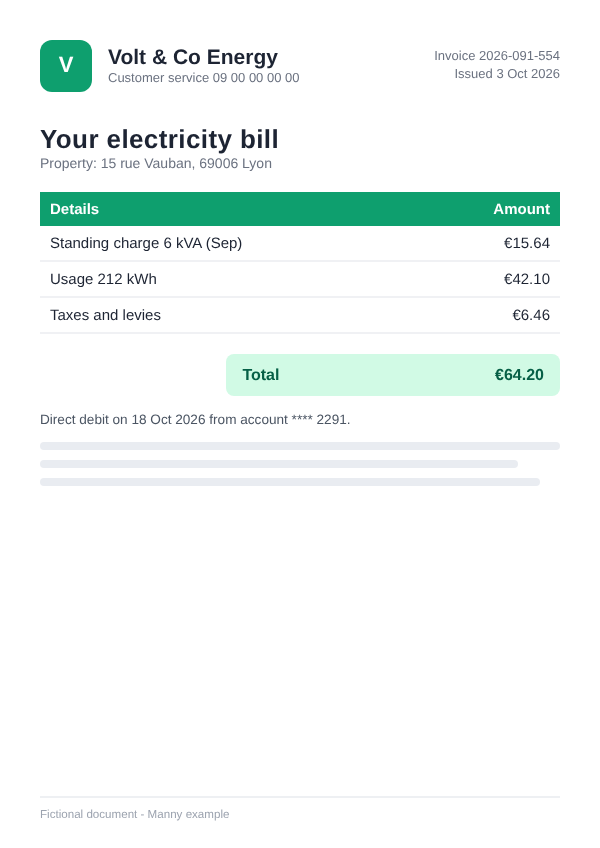
- Utility bills: until the next one confirms you paid, longer if you deduct a home office.
- Pay stubs: until they match your W-2 at year end.
- Anything that supports a tax return follows the tax rule: at least 3 years.
A rule for each paper
| Document | How long to keep it |
|---|
| Bank statements | About 1 year; longer if they prove a deduction or a big purchase |
| Credit card statements | Until you have checked them; longer for tax or warranty proof |
| Utility and phone bills | Until the next bill shows the payment |
| Pay stubs | Until you have checked them against your W-2 |
| Receipts for big purchases | As long as you own the item, for warranty and insurance |
| Loan papers | Until the loan is paid off, then keep the payoff letter |
| Tax-related statements | At least 3 years, like the return they support |
These are common rules of thumb, not legal limits. If a statement proves something, like a deductible donation, a business cost or a home improvement, it follows the tax record rule instead.
Why you can keep less paper
Most banks and card issuers let you download past statements online for several years. That means the paper copy is rarely the only copy. Check how far back your bank's archive goes before you shred, and save a digital copy of anything you need beyond that.
Papers to keep for good
- Birth certificates, Social Security cards, passports and marriage or divorce papers.
- Property deeds and the paid-off loan letter for your home or car.
- Wills, powers of attorney and life insurance policies.
Keep it digital, find it in seconds
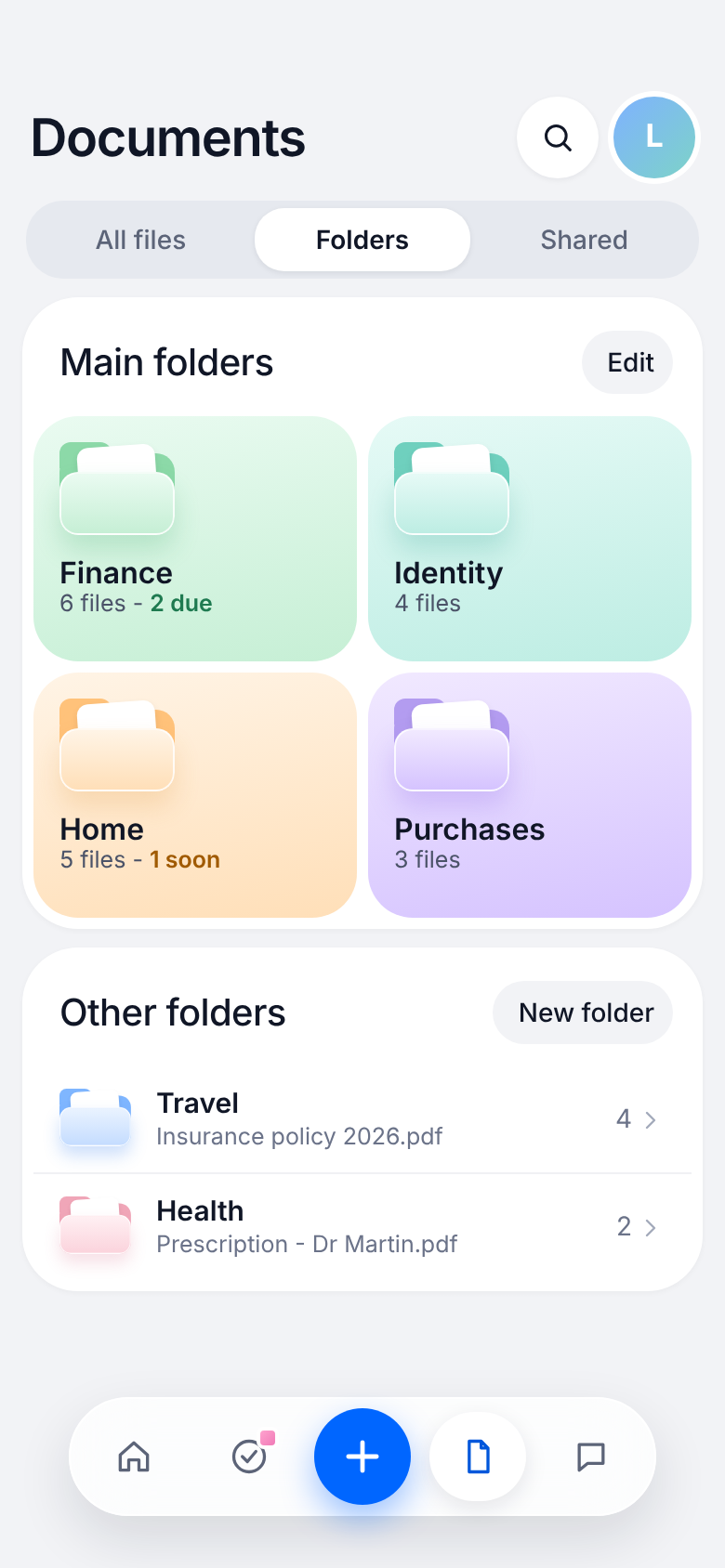
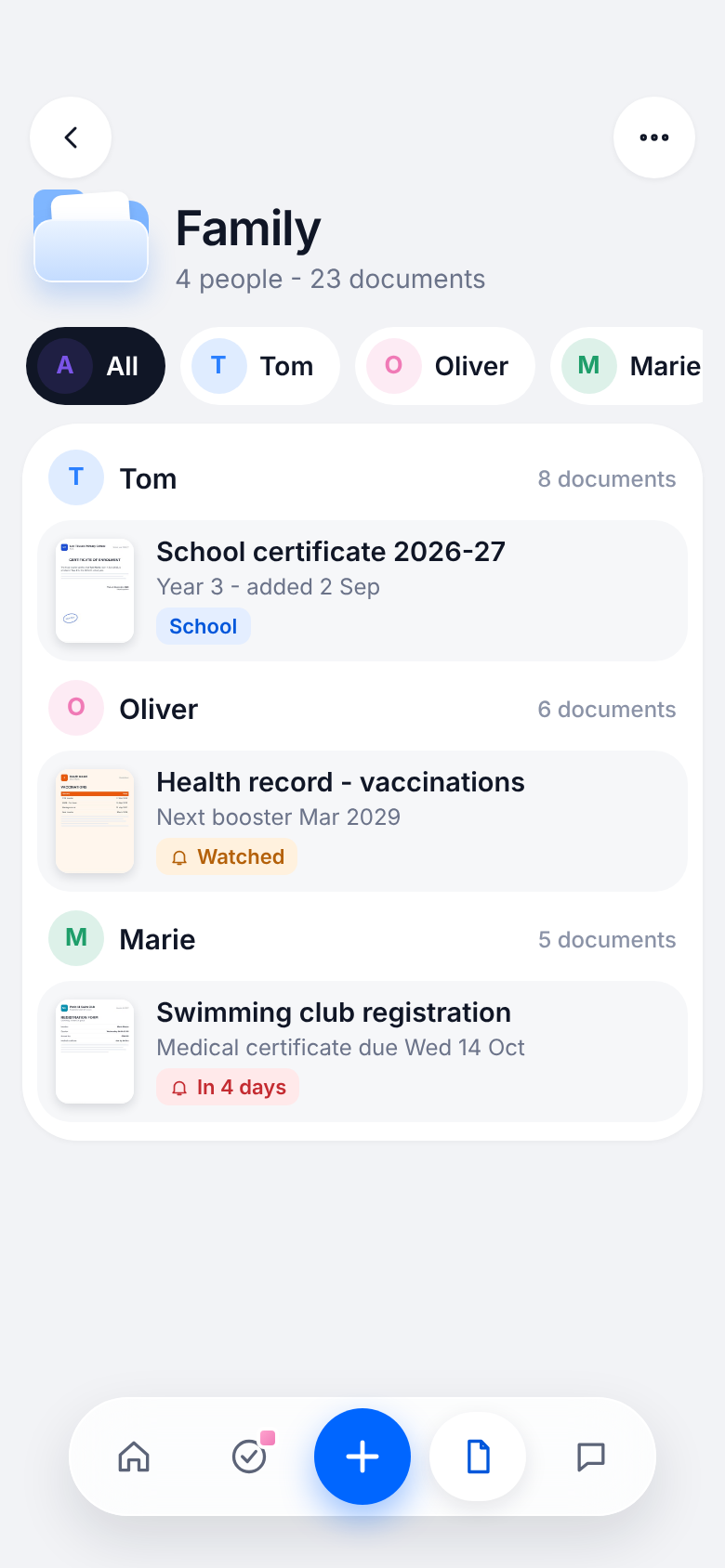
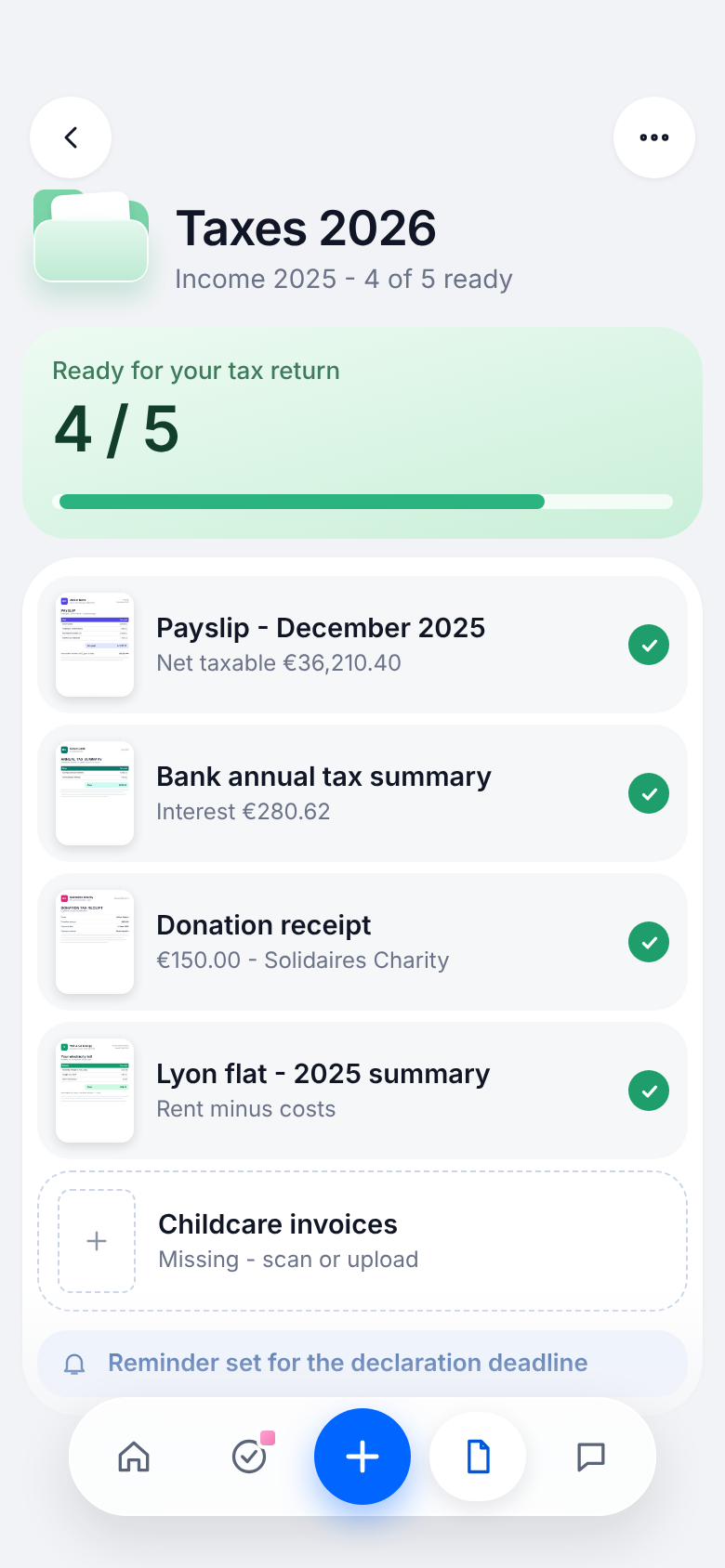
Connect your email or scan a statement: Manny files it into your folders and pulls out any due date, so the paper can go.
A ten-minute monthly routine
- 1Open the month's statements and check them for charges you don't recognise.
- 2Save anything tax-related into this year's tax folder.
- 3Shred paper statements older than your keep rule, if your bank has them online.
This guide is general information, not financial or legal advice. Last checked October 2026.