What to keep for the flat
| Type | Examples |
|---|
| Income | The lease, rent receipts or bank transfers, the deposit |
| Running costs | Electricity, water, internet if you pay them, building charges |
| Repairs and works | Plumber, electrician, painting, replacing appliances |
| Fixed costs | Landlord insurance, property tax, agency fees, loan interest |
An example year
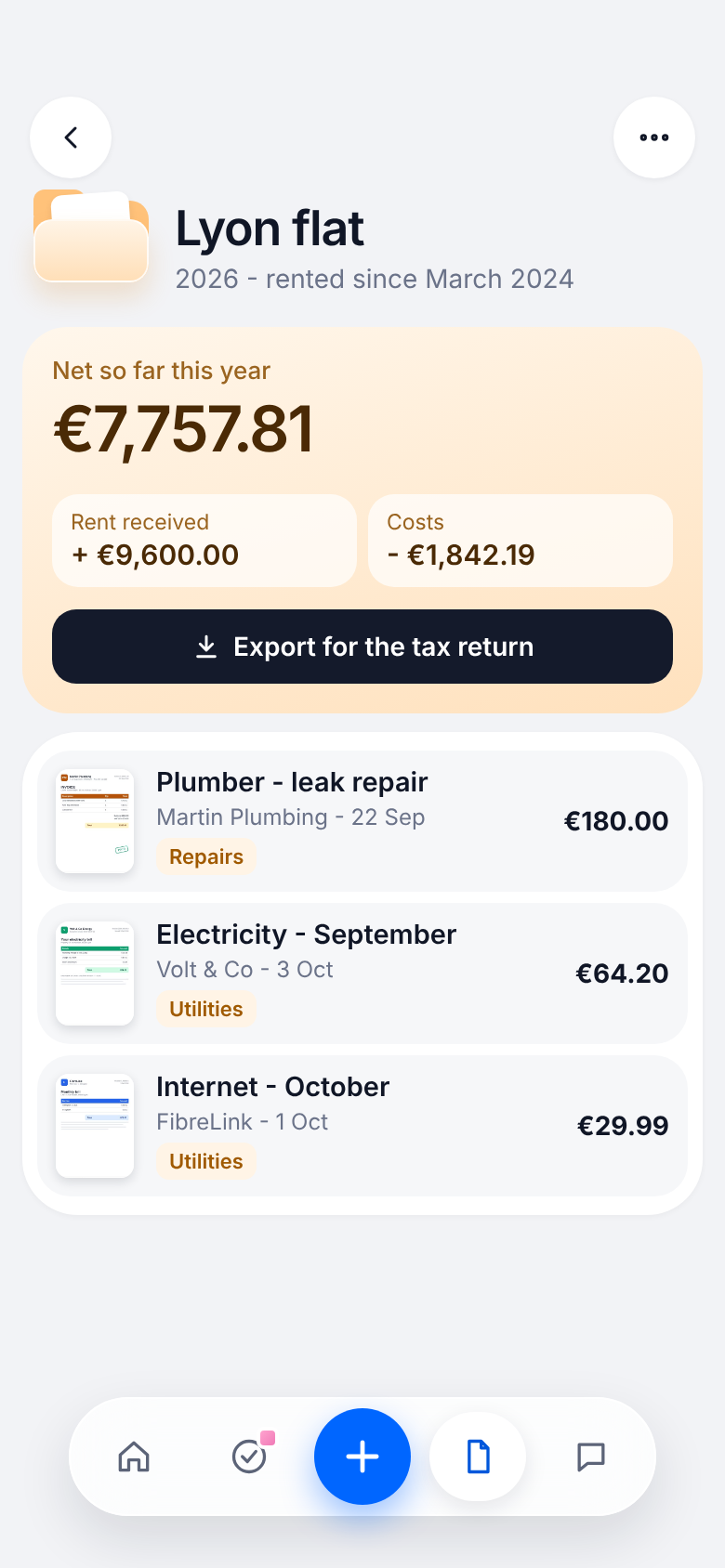
| Lyon flat, 2026 so far (let for 8 months) | Amount |
|---|
| Rent received (8 x €1,200) | + €9,600.00 |
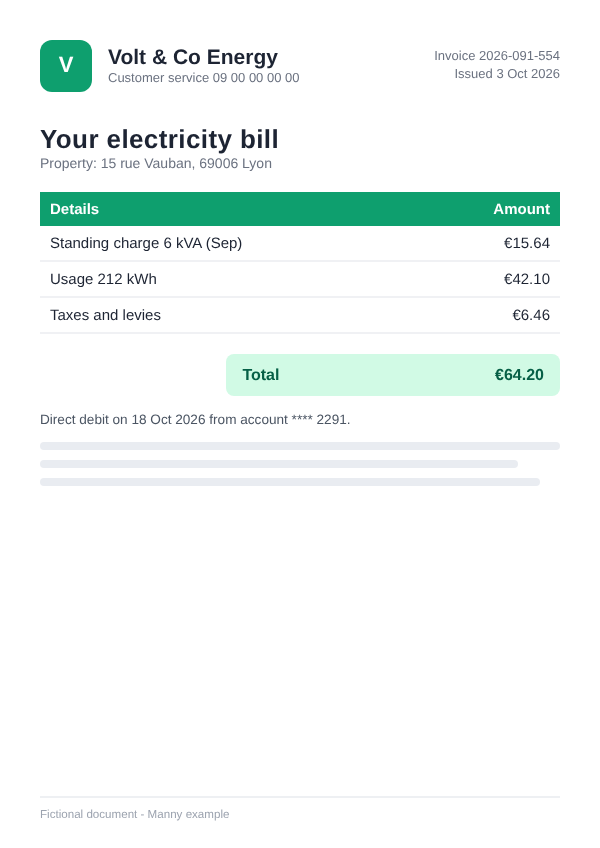
| Electricity and internet | - €941.90 |
| Landlord insurance | - €168.00 |
| Repairs (plumber, painting) | - €732.29 |
| Net so far | €7,757.81 |
Illustrative figures, the same as in the app screen above.
Flat rate or actual costs?
For an unfurnished rental, if your gross rents are under €15,000 a year, the simplified "micro-foncier" regime applies by default: you declare the rents and the tax office deducts a flat 30% for costs. You can instead choose the actual-costs regime ("régime réel"), where you deduct what you really spent. It is worth it when your real costs are higher than 30% of the rent, for example in a year with big repairs.
Furnished rentals follow different rules (the LMNP status), with their own flat rate and their own actual-costs option. Either way, the actual-costs regime only works if every cost is backed by an invoice, which is exactly why you keep them all year.
Rent in, costs out, totalled for you
Scan the bill or the invoice: Manny files it under the flat, reads the amount and keeps the running total. At year end, export everything for your return.
A routine that takes five minutes a month
- 1When the rent arrives, note it in the flat's folder.
- 2When a bill or an invoice arrives, scan it the same day.
- 3Once a month, check the running total.
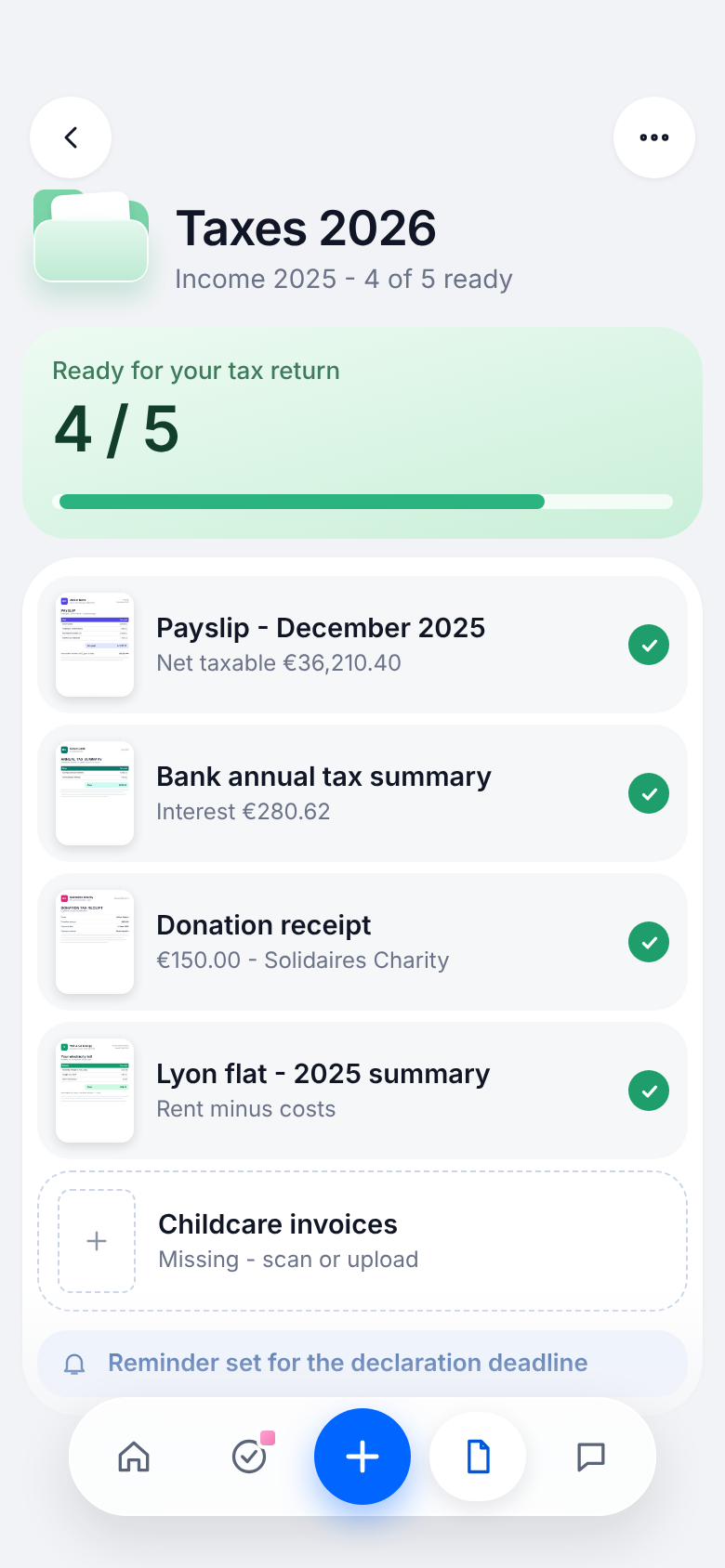
- 4In January, export the year and hand it to your accountant, or use it for your return.
This guide is general information, not tax advice. Thresholds and rules change: check impots.gouv.fr or ask an adviser for your situation. Last checked October 2026.