Why receipts get lost
They arrive at the worst moment: at the end of a meal, in a rush for a train, in a pocket you will not empty for a week. Paper fades, emails get buried, and by the 30th you are rebuilding the month from your card statement.
The two-second rule
The moment you pay, take the photo. That is the whole habit. A receipt captured on the spot is never lost, never faded, and already has the right date.
What a usable receipt shows
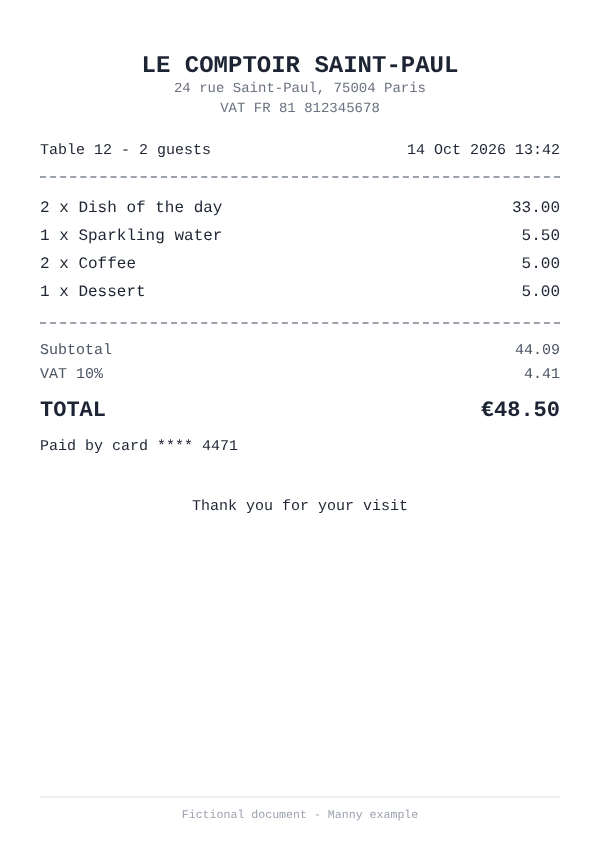
| Field | What to check |
|---|
| Merchant | Name and address |
| Date | Day of the expense |
| Amount | Total paid |
| VAT | Rate and amount |
A card payment slip or a bank statement line is usually not enough on its own: ask for the itemised receipt or the invoice. Your company's expense policy has the final word on what it accepts and whether it wants the originals.
Sort by month, not by type
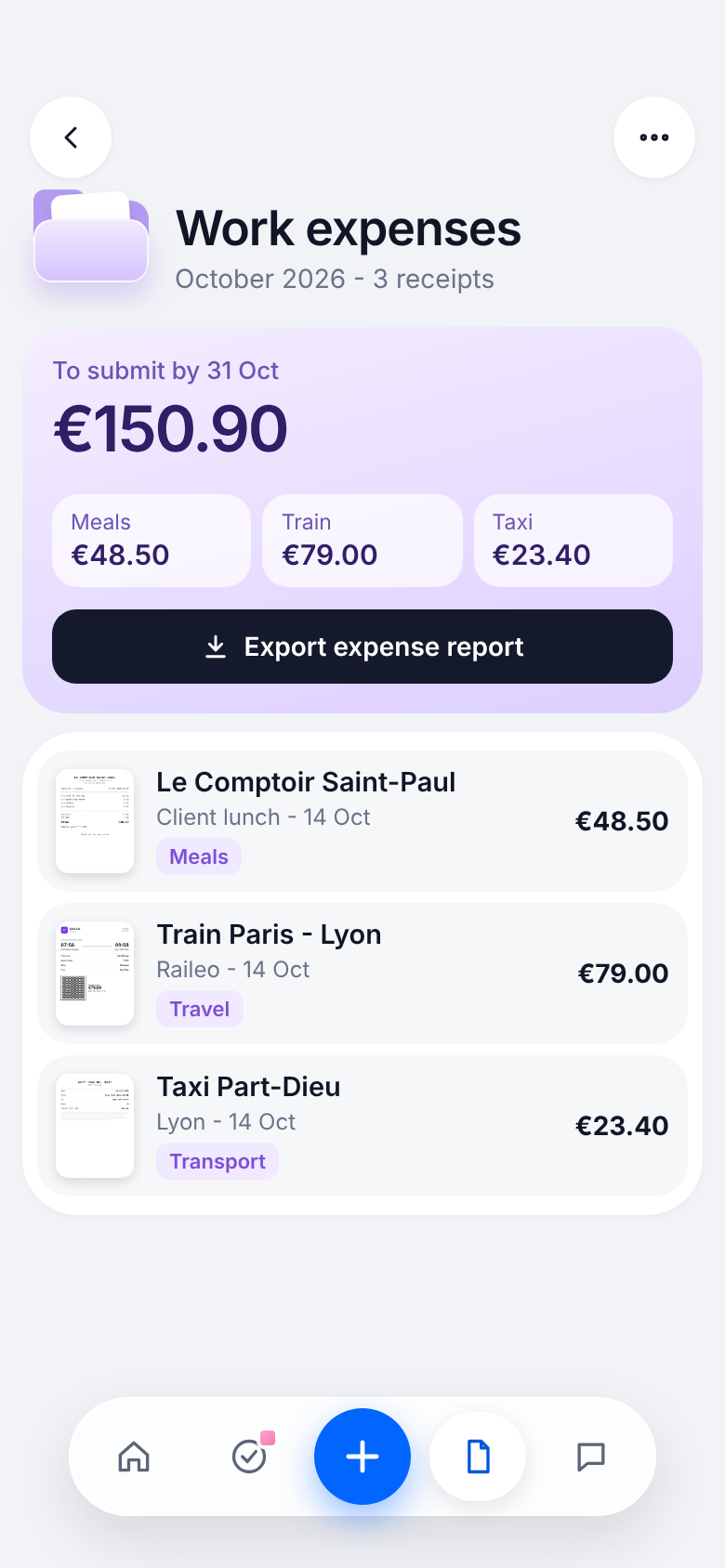
Expense reports are monthly, so your folders should be too. Inside the month, a category per receipt is enough: meals, train, taxi, hotel. The total per category is what your manager or accountant will look at first.
Snap it. Manny reads the amount and the VAT.
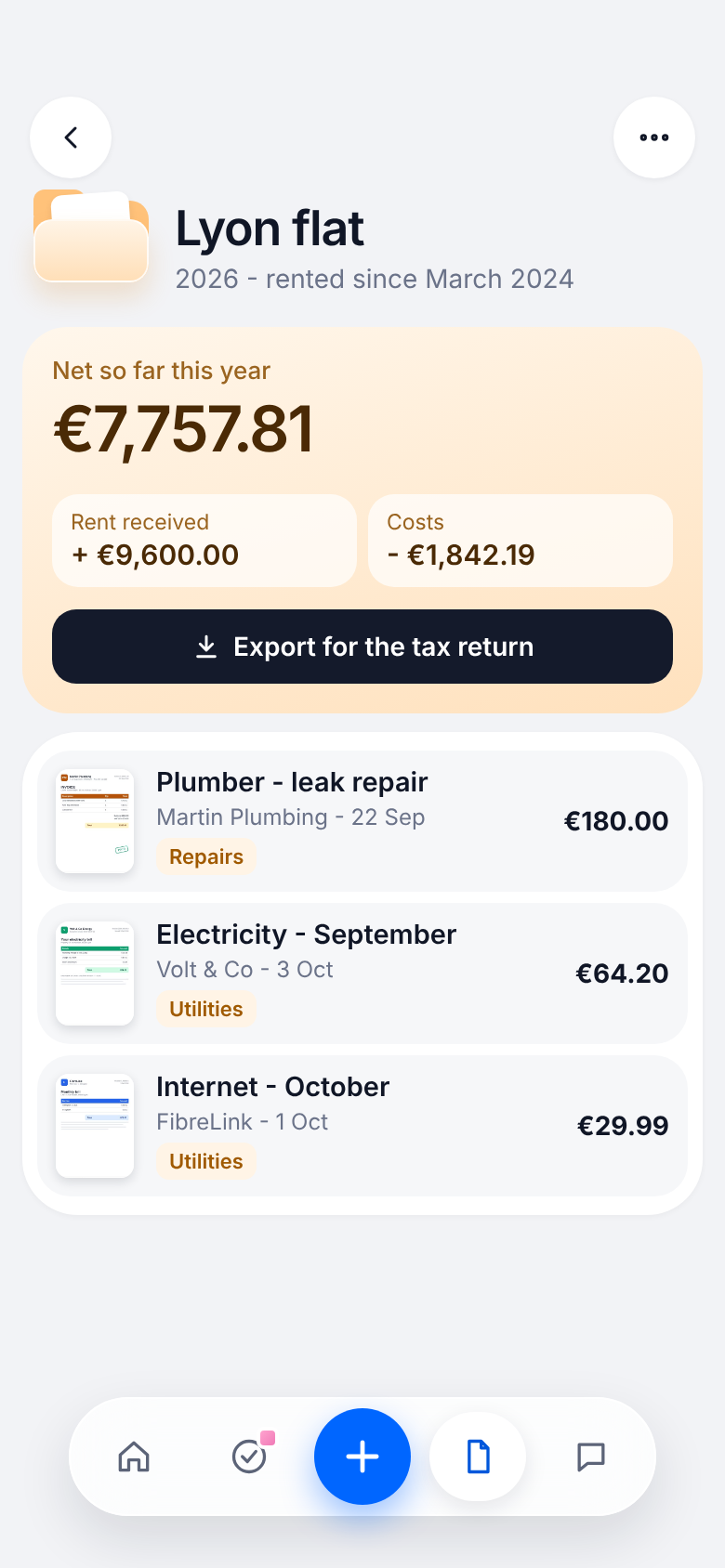
Every receipt lands in the month's folder with its category and total. At month end, export the whole report in one tap.
Freelancer or self-employed?
The same habit keeps your business costs ready for your accountant. Keep work expenses separate from personal ones from day one, and hand over one clean folder per month instead of a shoebox at year end.
Frequently asked questions
Is a photo of the receipt enough?
For your own records, yes. For your employer or the tax office, it depends on their rules: check your expense policy or ask your accountant.
What about receipts sent by email?
Forward or save them to the same monthly folder, so the report has one source.