Guides / US taxes
How long to keep tax records: a simple US guide
Three years covers most people, but not every paper. Here is how long to keep each kind of tax record in the US, and a simple way to know when it is safe to shred.
The Manny team - Updated October 2026 - 6 min read
 →
In short
- Keep a return and its supporting papers for at least 3 years after you file.
- Some cases need longer: 6 years if income was underreported by more than 25%, 7 years for a bad debt or worthless security claim.
- Keep records about property and investments until 3 years after the year you sell them.
- One folder per tax year makes it obvious which year you can let go.
The IRS time limits
The IRS ties record keeping to its "period of limitations": the time it has to review your return, or you have to claim a refund. Keep your records for at least that long.
| Situation | Keep records for |
|---|
| Most returns | 3 years from the date you filed |
| You claim a refund or credit after filing | 3 years from filing or 2 years from paying the tax, whichever is later |
| Income underreported by more than 25% | 6 years |
| Loss from a bad debt or worthless securities | 7 years |
| Employment tax records (if you have employees) | At least 4 years |
| You did not file, or filed a fraudulent return | Indefinitely |
Source: IRS, "How long should I keep records?"
What counts as a tax record
- The return itself, and the W-2s, 1099s and 1098s it was built from.
- Receipts for deductions and credits: donations, medical bills, childcare, business costs.
- Statements for retirement contributions, like IRA and HSA forms.
- Closing papers and improvement receipts for your home, which change your gain when you sell.
Property and investments: keep them longer
Records that show what you paid for a house, shares or other property matter for the year you sell, not the year you buy. Keep them until the period of limitations ends for the year you sell, so usually 3 years after that return. That can mean holding the purchase papers for decades.
One folder per tax year, sorted for you
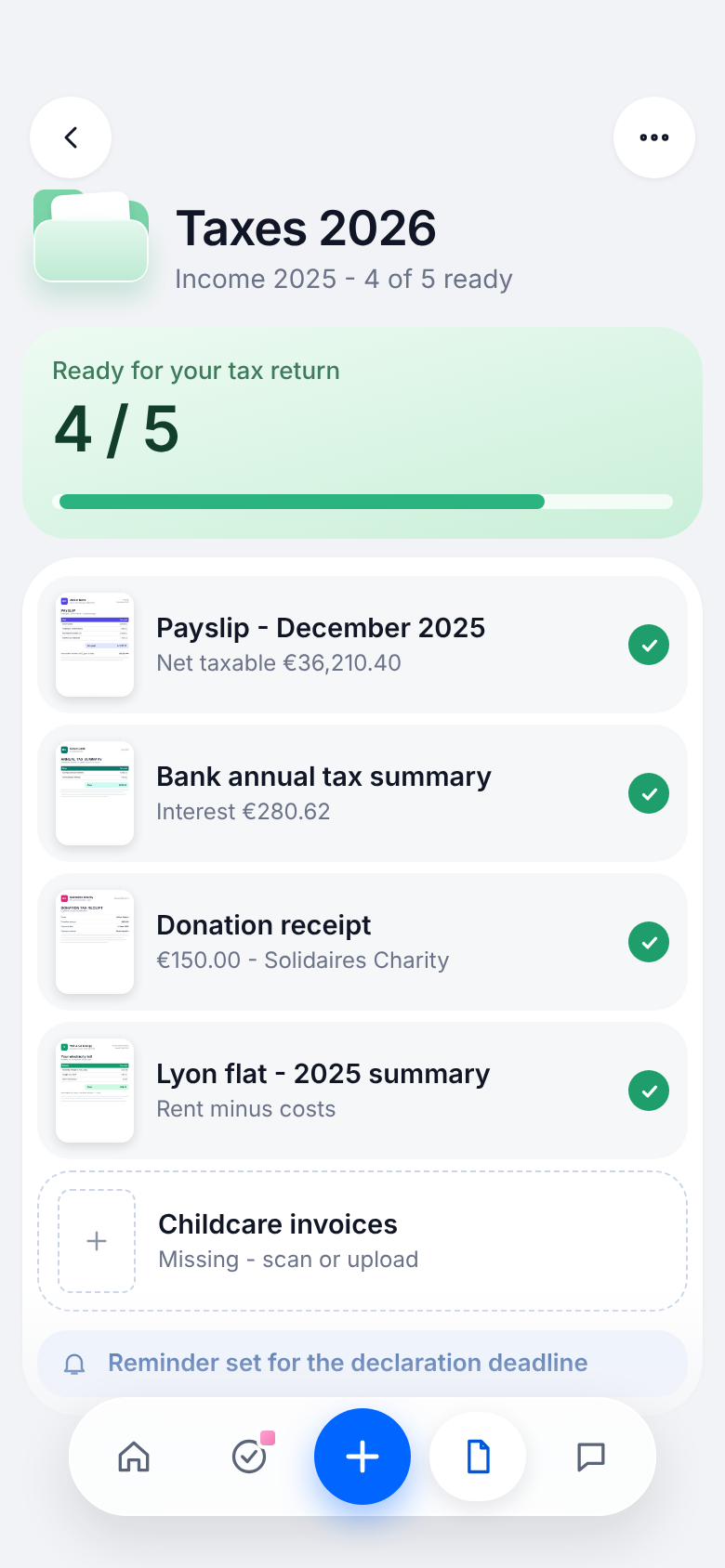
Scan a W-2 or a donation receipt, or connect your email: Manny files it in the right year's folder and reminds you of the filing deadline.
A system that tells you when to shred
- 1Create one folder per tax year, named after the year of the income, like "Taxes 2026".
- 2Drop each form and receipt in as it arrives, from January onward.
- 3Keep a separate "Keep long term" folder for home and investment records.
- 4Each spring, after filing, check the oldest year: if it is past its time limit and none of the longer cases apply, you can shred it.
Frequently asked questions
Is a scanned copy good enough for the IRS?
The IRS accepts electronic records as long as they are complete, legible and you can produce them when asked. Keep originals of anything official you might need to show in paper form.
Should I keep records longer for my state?
Some states have longer review periods than the IRS. Check your state's tax agency before shredding.
This guide is general information, not tax advice. Check irs.gov or ask a tax professional for your situation. Last checked October 2026.